You’ve read the articles and tried lots of hacks. You’re still on your phone too much.
This isn’t a willpower problem. It’s a design problem.
The 30-Day Phone Fight is a structured program that helps you understand exactly how your phone was designed to capture your attention -- and gives you a clear, proven system to take it back. The Phone Fight doesn’t rely on willpower or guilt. It’s designed to let you keep using your phone for everyday tasks, while you go through a robust process that will create significant space between you and the apps that are stealing your time, creativity and well-being.
Does this ↓ sound familiar?
You check your phone first thing in the morning because it feels like you have to. Before you’ve even had your coffee, you’re stressed about at least three things. You’re not even dressed yet, but it feels like you’re already failing the day.
Or it's the evening. You meant to go to sleep an hour ago but instead the glow of a screen is lighting up your face. You know being on your phone at night is bad for you and you’ve tried to stop, but even though it’s often draining, there’s something comforting about it.
The plain truth is that it doesn't matter what you’re doing on your phone in these moments. You could be on social media, reading the news, gaming, or just bouncing between apps. The app itself doesn’t really matter.
What matters is that your phone is eating time you meant to have for yourself -- for your hobbies, for sleep, for focused creativity, for the people you love. It’s a real problem and you’re right to be worried.
But hear me on this: the fact that you haven’t been able to break free is not a character flaw. It's the intended result of several billion dollars of engineering.

Why the tips don't work
The people who built your phone and the apps on it are among the best behavioral scientists and engineers in the world. Their singular job is to make sure you keep coming back.
“Charge your phone in the kitchen?” Not going to cut it.
Where Did Your Good Ideas Go?
When I started researching why my brain felt so wrung out from overusing my phone, I learned about the relationship of the brain’s Default Mode Network to creativity and it changed everything for me.
Here’s what I found: when your brain isn't focused on anything in particular, something important is happening. Four regions of the brain that don't usually communicate with each other come online and start collaborating. They process your experiences, turn over your problems, and because these regions don't normally talk to each other, they make unexpected connections. This is where your best ideas come from. Your shower thoughts. The solution that arrives out of nowhere on a walk.
This system is called the Default Mode Network.
And phone overuse crushes it in two ways.
First, we're never bored anymore. The phone is always there, always offering something. So the DMN never gets the quiet it needs to do its work.
Second, if you're filling that quiet time with social media or news, you're flooding the DMN with heavy, unresolvable content -- outrage, comparison, anxiety, noise. Your brain can’t process it all. It's too much.
I believe this is a significant driver of the anxiety and depression epidemic we're seeing. Not a moral failing. Not weakness. A brain that never gets to rest.
The 30-Day Phone Fight gives your brain a chance to rest, recover, and come to balance by letting the Default Mode Network do what it does best -- solve problems, make sense of your life, and give you a feeling of peacefulness.

It's not an accident.
The apps on your phone were built by some of the most talented behavioral scientists and engineers in the world. Their job -- every single day -- is to figure out how to keep you coming back. The infinite scroll, the notification, the like button, the autoplay: none of these are neutral design choices. Every one of them was tested and refined to be as hard to resist as possible.
This isn't a conspiracy theory. It's a business model.
Once you understand how these systems work -- really understand them -- something shifts. You stop blaming yourself. And you start making different choices, not through willpower, but through knowledge. I’ve seen it time and time again with my students. There’s power in understanding why apps are so addictive.
There is a way through this.
I’ve led other people to a new relationship with their phone and I’m ready to help you get there.

About Emmy
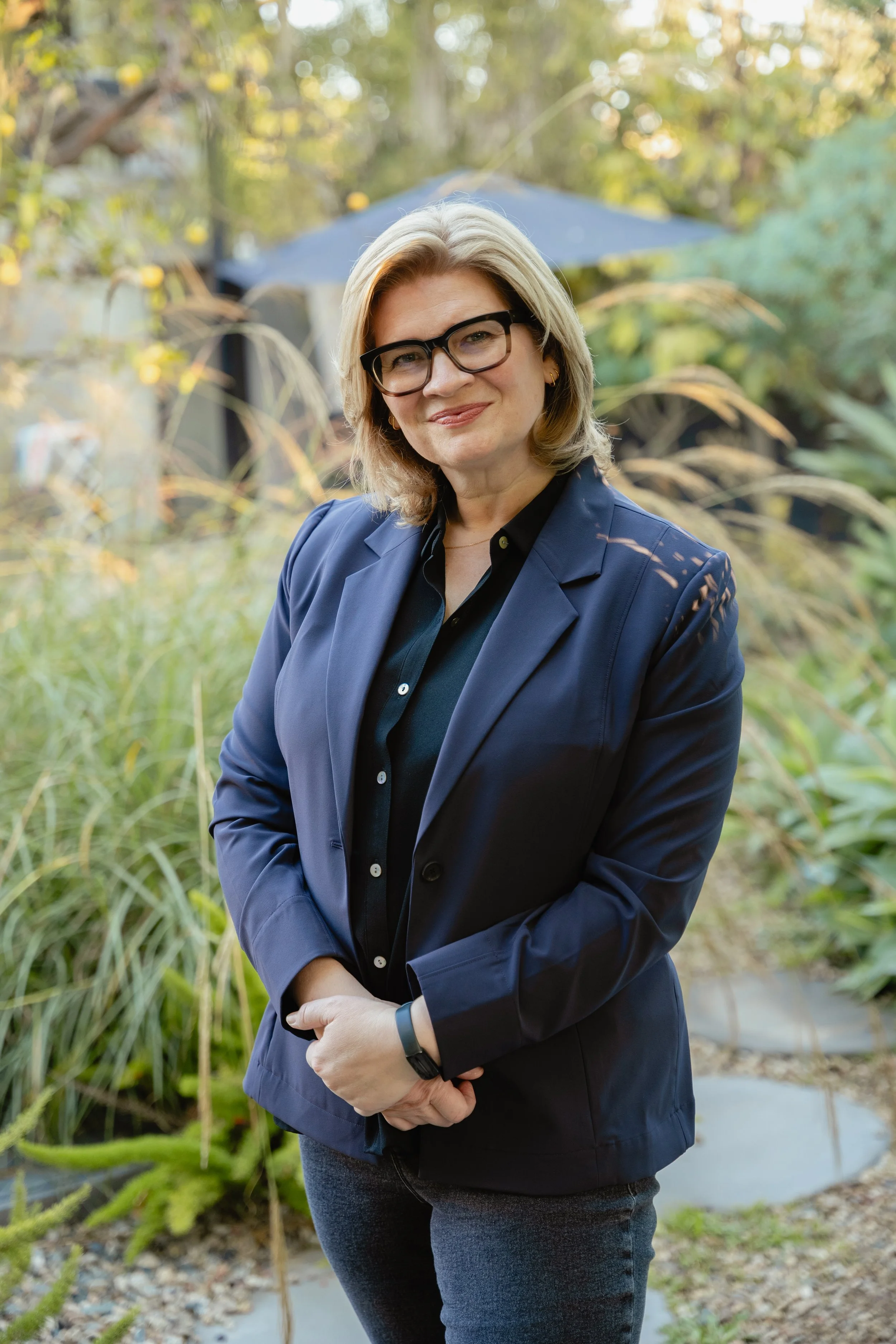
I'm Emmy Laybourne -- novelist, educator, and adjunct instructor at DePaul University, where I teach a course on the attention economy called Attention Grabbed: Mind, Media & Manipulation.
I came to this work the hard way. A few years ago I hit rock bottom with a mobile gaming addiction. I wasn't scrolling social media or doomscrolling the news -- I was losing hours every day to games designed to be unputdownable. I knew it was a problem. I couldn't stop anyway.
So I did what writers do. I researched my way out. I learned how persuasive design works, what it does to the brain, and what it actually takes to change the pattern. I studied recovery models. I built a system for myself, then started running other people through it. It worked. The 30-Day Phone Fight is that system -- refined, structured, and grounded in the science of how giving your brain a deep rest from phone overuse makes you feel so much better that it becomes easier to make lasting changes.
What the 30-Day Phone Fight looks like
This is a self-paced online course and it’s built around a structure that actually works with your life.
In the first two modules you learn how persuasive design works and what phone overuse has been doing to your brain. You need to understand what you're up against before you start changing anything. In the online lessons, I lead you to figure out what apps you need to break away from and prepare to make a significant change.
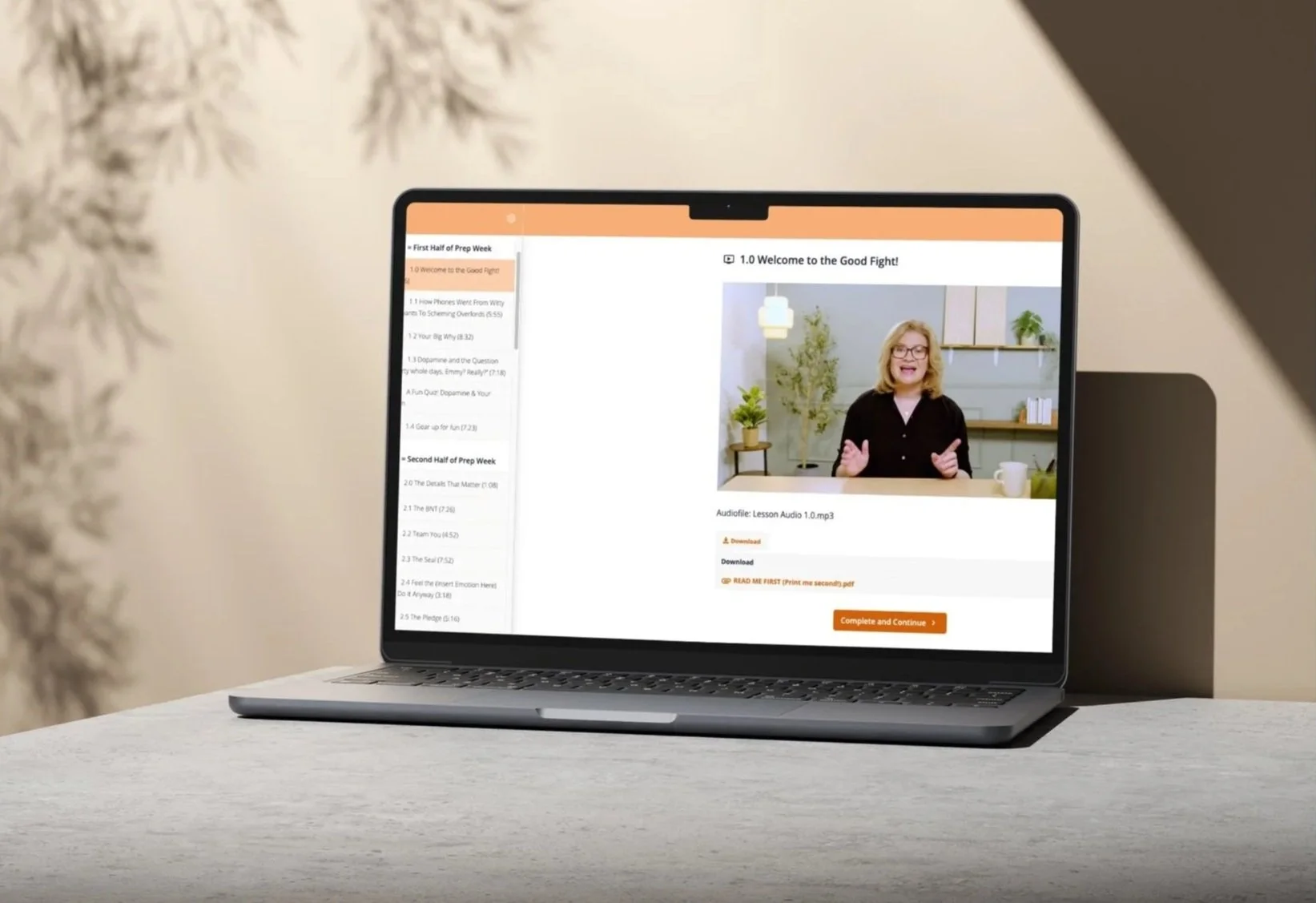
Then you begin your official Phone Fight. You have five video lessons a week, each under 12 minutes, with journal prompts and quizzes along the way. It's designed to fit into a real person’s actual life.
The transformation that follows is truly remarkable. My students report surges of creativity, better sleep, feeling more awake and alive, and finding they are able to relate to their loved ones better.
What People Are Saying
“Something surprising has been how little I've missed Facebook and Instagram. Holy s#!*, I thought I'd be desperately resisting the urge to peek at them. Nope.”

— Lexi L., Bucks County, PA
"Me and my girlfriend did the Phone Fight together and I don't think I can imagine going back to my old phone habits. We found ourselves having longer, better conversations and spending more quality, phone-free time together. It also made me focus, relax, and overall feel better. I can't recommend it enough."

-- Jackson W., Los Angeles

"My attention is back. It is palpable. I have more energy in the morning. I am doing more creative work and focusing for longer periods of time."
— Steve Pratt, author and co-founder of The Midlife Field Guide
Ready to fight back?
The 30-Day Phone Fight is $197. That's it. No upsells, no subscription, no tricks. Just the course, yours to keep, with everything you need to change your relationship with your phone for good.
If you go through the course and don't feel it was worth your time and money, email me and I'll refund you in full. No runaround.